Implant-Supported Fixed Bridge Explained
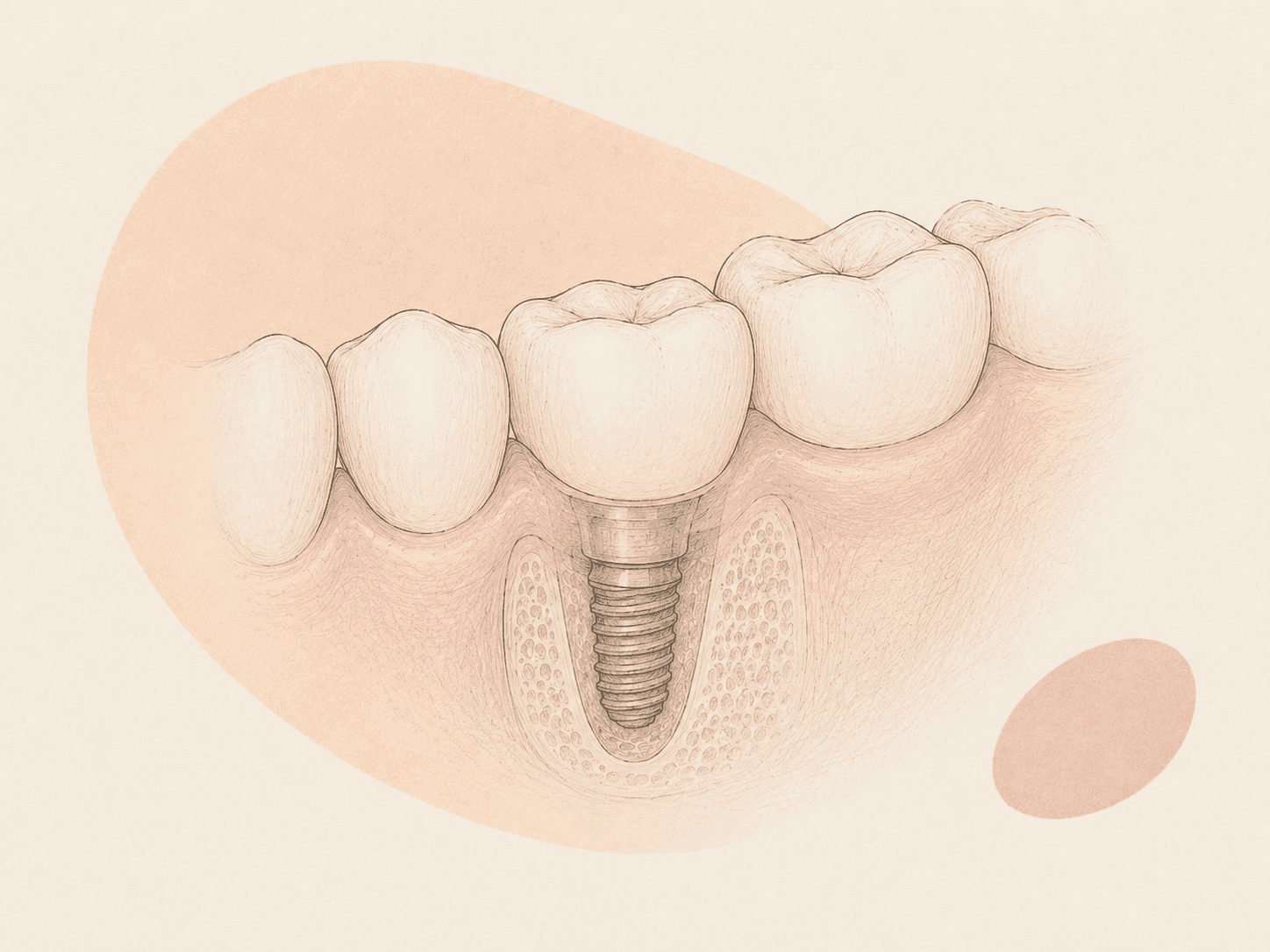
A fixed implant-supported bridge replaces one or more missing teeth by using dental implants as anchors. It may be planned for a short gap, such as a three-unit implant bridge, or for a larger restoration, such as a full-arch fixed implant bridge.
The bridge may be screw-retained or cement-retained depending on the restorative plan. Your clinician reviews bone volume, gum health, bite forces and cleaning access before recommending a design that fits your oral health and treatment goals.
Goals And Possible Benefits Of An Implant Bridge
Possible benefits depend on anatomy, bite forces, gum health and the quality of planning. In suitable cases, an implant bridge may help with:
- Replacing missing teeth without using nearby natural teeth as the main support
- Providing a fixed option that may feel more stable than removable alternatives in selected cases
- Supporting full-arch rehabilitation through one coordinated restorative plan
- Improving comfort with chewing and speaking when the bite is carefully balanced
A dental specialist can explain what is realistic after reviewing your imaging, oral health and treatment goals.
Who May Need An Implant-Supported Bridge
An implant-supported bridge may be discussed for people with one or more missing teeth who want a fixed solution and have enough bone and gum health to support implants. Suitability depends on specialist assessment and imaging.
- Gum disease and active infection are usually managed before implant treatment
- Imaging helps confirm bone volume and safe implant positioning
- Clenching, grinding and complex bite patterns may affect implant number, bridge material and whether a fixed bridge is suitable
- International patients should allow enough time for early checks and arrange ongoing follow-up after returning home
Final eligibility and bridge design can only be confirmed after clinical review, imaging and discussion of alternatives.
Implant Bridge Design Options
Implant bridgework can be planned in several ways. The right design depends on implant position, bite forces, hygiene access and whether the bridge is short span or full arch.
Screw-Retained Implant Bridge
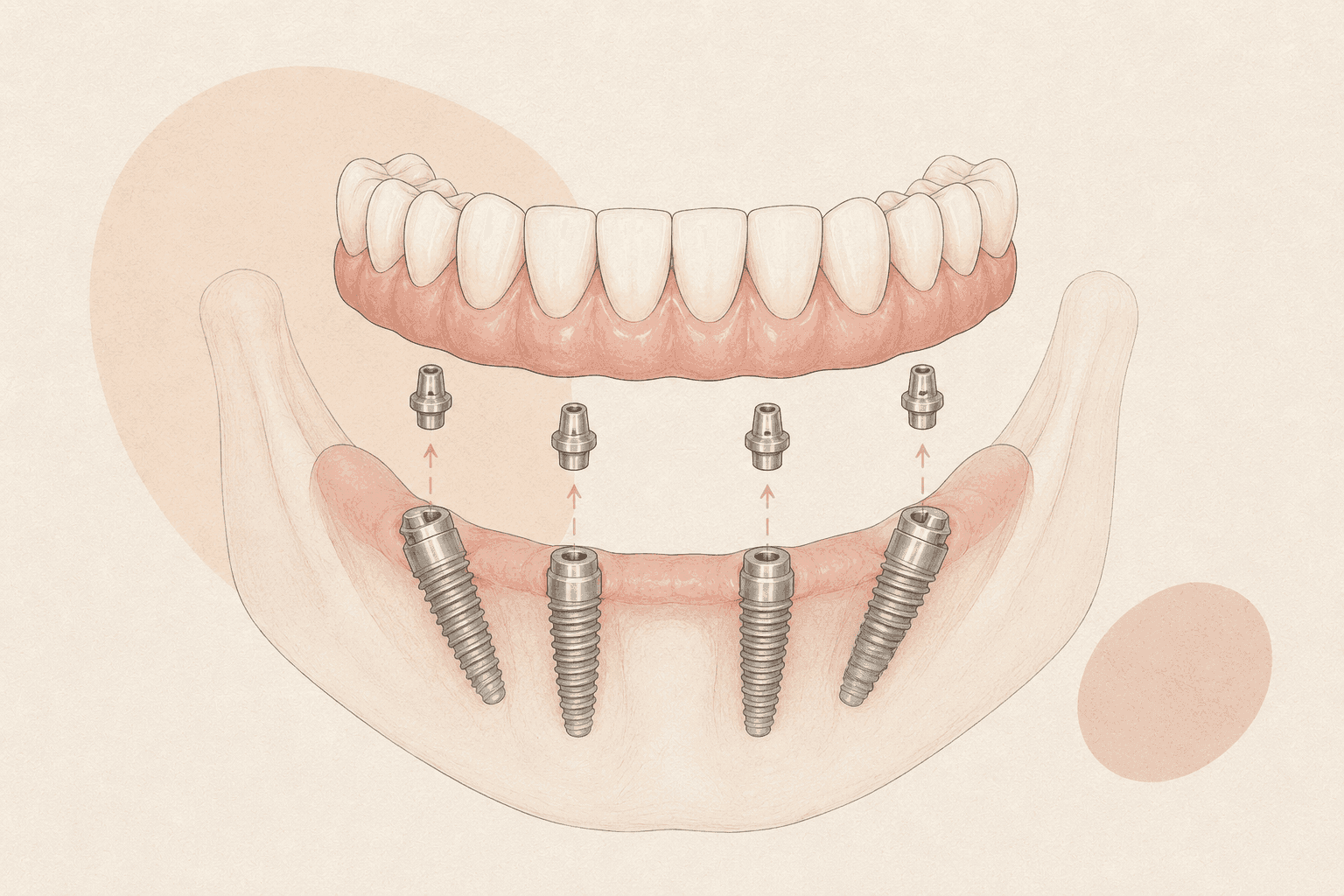
A screw-retained implant bridge is attached to implant abutments or multi-unit components with screws. This can make maintenance and some repairs easier, but it requires accurate implant positioning and careful planning of how the bridge meets the gumline.
Cement-Retained Implant Bridge
A cement-retained implant bridge is fixed over abutments using dental cement. It may support certain aesthetic goals in selected cases, but cement control matters because leftover cement can increase the risk of gum inflammation around implants.
Three-Unit Implant Bridge
A three-unit implant bridge usually replaces a short span of missing teeth. Depending on the case, it may be supported by two implants or, in carefully selected situations, by an implant and a natural tooth. Implant-only support is often preferred when feasible.
Full-Arch Fixed Implant Bridge
A full-arch fixed implant bridge replaces most or all teeth in one arch and is supported by multiple implants. Some plans include a temporary fixed bridge soon after surgery, followed by a final bridge after healing and bite refinement.
How Implant Bridge Treatment May Be Planned
Treatment steps vary depending on whether implants are already present or need to be placed. The clinic should explain a staged plan with checkpoints for healing, bite comfort and restoration fit.
Assessment And Treatment Planning
The dental team reviews medical history, dental history and treatment goals, then evaluates gum health, bite and smile design. 3D imaging is commonly used to plan implant positions and confirm a safe pathway for a fixed implant bridge.
Implant Placement If Needed
If implants are not already present, they are placed in a controlled clinical setting and stability is assessed. Bone grafting may be recommended in selected cases depending on bone volume and the bridge plan.
Temporary Bridge Phase
Some cases use a temporary fixed bridge soon after surgery, especially in full-arch plans when conditions support this approach. Other cases use a removable or transitional solution until implant integration is confirmed.
Final Bridge Delivery
After healing, the bridge is designed and fitted using impressions or digital scans. The clinician checks bite balance, hygiene access and comfort before completing delivery of the implant-supported fixed bridge.
Anesthesia And Comfort During Implant Bridge Treatment
Anesthesia and comfort planning depend on whether implants are being placed, the number of implants involved and your medical history. Your clinician should explain the options, expected discomfort and warning signs that need prompt review.
Anesthesia Options
Implant placement is often performed with local anesthesia, sometimes with sedation for additional comfort. Full-arch surgery or complex cases may involve deeper sedation or general anesthesia depending on medical assessment and facility capabilities.
Typical Discomfort
When surgery is involved, swelling and soreness are common during the first few days. For restorative-only visits, discomfort may be limited to gum pressure or bite adjustment sensitivity. Your clinic should explain what is expected and what should be checked quickly.
Preparing For An Implant Bridge Abroad
Preparation should cover both clinical safety and travel logistics. A structured plan helps international patients arrive with the right records and enough time for essential follow-up checks.
Records And Health Review
Share recent X-rays or scans if available, your medication list and any medical conditions. Tell the clinic about allergies, bleeding risks and previous implant or dental work.
Oral Health Readiness
Gum disease, untreated decay and active infection are usually managed before implant surgery or bridge fitting. Consistent daily hygiene supports safer healing and long-term implant health.
Travel Planning
Allow enough days in the destination for imaging, surgery if needed, early post-op checks and bite adjustments. A recovery-friendly stay, soft food options and reliable transport to appointments can make the treatment period easier to manage.
Typical Travel Itinerary For An Implant Bridge
Implant bridge timelines vary. Some plans may be completed in one trip when conditions support immediate loading, while others require a staged approach with a second visit for the final bridge.
Option A: One Trip
Day 0 to 1 usually includes consultation and imaging. Day 1 to 3 may include implant placement if needed and fitting of a temporary fixed bridge when clinically appropriate. Day 4 to 7 focuses on early checks, bite adjustments and written guidance for home care and follow-up.
Option B: Two Trips
Trip 1 focuses on assessment, implant placement and early follow-ups, often over about 7 to 14 days depending on the case. Trip 2 takes place after a healing period, often several months later, to deliver the final screw-retained implant bridge or cement-retained implant bridge and confirm bite and cleaning access.
Implant Bridge Recovery And Healing Timeline
Recovery depends on whether surgery is performed and whether a temporary bridge is loaded early. Your clinic should provide recovery ranges and review checkpoints rather than fixed dates.
First Week After Implant Bridge Surgery
If implants are placed, swelling and soreness are often most noticeable in the first few days. Soft foods, careful hygiene and rest are commonly advised. Early checks help confirm healing and adjust the bite if a temporary bridge is used.
Weeks 2 To 6
Soft tissue healing continues and comfort often improves. The focus is on protecting implants from overload and keeping plaque control strong around the bridge.
Months 3 To 6
Implant integration is assessed over time. Final bridge planning and delivery often take place after stable healing is confirmed, especially in full-arch cases.
Long-Term Maintenance
Long-term implant bridge health depends on daily hygiene, regular professional maintenance and prompt review of bite changes. Fixed implant bridge components may need periodic servicing over time.
Aftercare And Follow-Up For An Implant Bridge
Aftercare for an implant bridge should support continuity after you return home. International patients benefit from written instructions, implant details and a maintenance plan with a local dentist.
Cleaning Under The Bridge
Cleaning access under a fixed implant bridge is important for reducing inflammation risk. Your clinic may recommend specific brushes, floss threaders, water irrigation devices or other tools based on the bridge design.
Remote Check-Ins
Remote reviews can help monitor gum health, bite comfort and early concerns after travel, but they do not replace in-person care when symptoms need examination. Keep copies of implant details, bridge type and imaging so your local dentist can support ongoing care.
Maintenance Visits
Regular professional checks help detect early inflammation, screw loosening or wear. If you have a screw-retained implant bridge, planned retrievability may simplify certain maintenance steps.
Risks And Complications Of Implant Bridges
All implant and bridge treatments carry risks. Your clinician should explain risks based on your medical history, anatomy and bite forces, including what monitoring is needed after you return home.
More Common Risks
- Swelling, bruising and temporary discomfort after surgery
- Gum inflammation if cleaning access is difficult
- Bite discomfort that may require adjustments
- Screw loosening in screw-retained designs or minor chipping of bridge material
Less Common Risks
- Infection or delayed healing
- Failure of the implant to integrate with bone
- Mechanical failure, including fracture of components or the bridge
- Peri-implantitis, a progressive inflammatory condition that can affect bone support around implants
When To Seek Help
Seek prompt clinical review for fever, increasing swelling, persistent heavy bleeding, spreading redness, severe pain that does not improve or sudden changes in breathing or swallowing. If the bridge feels loose, your bite changes suddenly or you notice pus or a persistent bad taste, arrange evaluation quickly.
Planning An Implant Bridge In Turkey Or Iran
International patients may consider Turkey or Iran for an implant-supported bridge when they want access to implant teams, diagnostic imaging and restorative workflows that can support complex planning. The main priorities should be clinician experience, sterilisation standards, laboratory quality control, communication and a clear post-treatment plan.
Turkey
Turkey has a broad implant dentistry ecosystem with access to 3D imaging, digital planning and laboratory support for bridges, including full-arch restorations. When comparing clinics, international patients should review surgeon credentials, facility standards, communication quality and scheduled checks before travel clearance.
Iran
Iran has dental and surgical teams experienced in implant placement and bridge delivery, with established centres that can support coordinated case review. Clear documentation, remote check-ins and a plan for local maintenance help support continuity after returning home.
Hear From Patients
Patient Reviews
Questions About Implant-Supported Fixed Bridge
Need More Help?
Have questions or need support planning your next step? Cura can help you understand the process and prepare for clinic conversations.