All-on-6 Full-Arch Dental Implants Explained
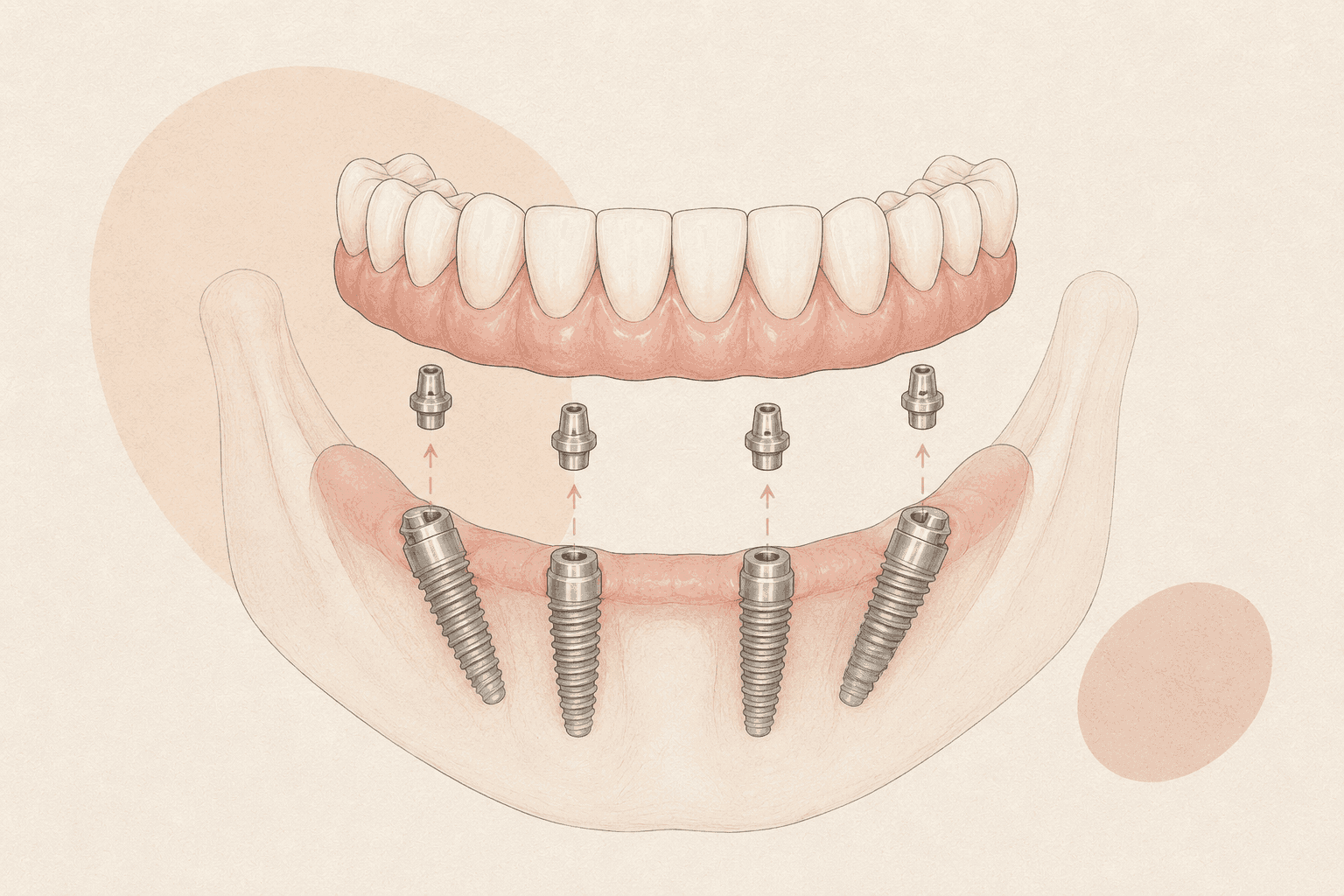
All-on-6 full-arch rehabilitation may be planned for people with many missing teeth, failing teeth or an unstable denture. Six implants are placed across one jaw arch to support a fixed full-arch bridge. Implant number and position are planned around stability, bite function, bone support and the final restorative design.
Treatment may include extractions, temporary fixed teeth and a later final bridge. For international patients, planning should include early healing checks before travelling home and a clear pathway for follow-up care after return.
Goals And Possible Benefits Of All-on-6 Implants
When clinically appropriate, a full-arch bridge supported by six implants may improve function and daily comfort compared with missing teeth or unstable removable dentures. The outcome depends on bite forces, gum health, bone support, prosthetic design and long-term maintenance.
- May provide fixed teeth supported by dental implants
- Can support chewing function and speech for many patients
- Uses six implants to help distribute support across a full arch
- May reduce denture movement compared with conventional removable dentures in suitable cases
- Often follows a staged pathway with temporary teeth and a final bridge phase
Who May Be Suitable For All-on-6 Dental Implants
An implant dentist or oral and maxillofacial surgeon must confirm whether All-on-6 dental implants are suitable. The decision depends on an in-person examination, dental imaging and a review of medical history.
- People with several missing or failing teeth in one arch, or an unstable denture
- Patients with stable gum health, or periodontal disease that has been treated and controlled
- Cases where bone volume and anatomy allow safe implant planning
- Patients whose general health supports surgery and anesthesia planning
- People with realistic expectations about temporary teeth, adjustments and maintenance
- International patients who can allow enough time for early reviews before travelling home
Smoking, uncontrolled diabetes, untreated gum disease, heavy teeth grinding and some medications can increase complication risk. These factors may change the recommended timing, technique or treatment plan.
All-on-6 Implant Technique And Loading Options
All-on-6 treatment can be planned with different surgical and loading approaches. The safest option depends on primary implant stability, bone quality, gum condition, infection risk and bite forces.
All-on-6 With Immediate Loading
In selected cases, a temporary fixed bridge may be fitted soon after implant placement. This usually requires strong primary stability and careful bite control to protect healing. The temporary bridge is different from the final teeth.
All-on-6 With Delayed Loading
When implant stability, infection risk or grafting needs make immediate loading less suitable, the clinician may recommend a healing period before fitting the bridge. This approach may be safer for more complex cases.
Tilted Posterior Implants
Some All On 6 plans use angled posterior implants to improve implant distribution and work around anatomical limits in the back of the jaw. Precise planning is important to protect nearby structures and support a stable prosthetic design.
Flapless Implant Placement
A flapless approach may be used in selected cases to reduce soft tissue disruption. It requires careful imaging and planning, and may not be suitable when visibility, grafting or tissue management requires direct access.
How All-on-6 Implant Treatment May Be Planned
The exact sequence varies by clinic and diagnosis, but All-on-6 implants usually follow a structured surgical and restorative pathway.
Assessment And Treatment Planning
The dental team reviews medical history, gum health, bite function and smile goals. Imaging is used to plan implant positions, assess bone and identify important anatomical considerations.
Extractions And Site Preparation
If failing teeth are present, extractions may be performed. The clinician checks infection risk and may recommend site management steps to support safe healing.
Implant Placement
Six implants are placed in the jawbone and their stability is assessed. Healing components are selected based on whether a provisional bridge is planned immediately or after a healing period.
Provisional Bridge
If immediate loading is appropriate, a temporary fixed bridge may be fitted with controlled bite forces. If delayed loading is chosen, a protective plan is used while healing progresses.
Final Bridge Fitting
After sufficient healing and stability checks, the final full-arch bridge is made and fitted. The team reviews bite refinement, cleaning access and the maintenance plan.
Anesthesia, Comfort And Early Warning Signs
All-on-6 surgery is commonly performed with local anesthesia and may include sedation depending on procedure length, anxiety level and clinic setting. Some cases may be planned under general anesthesia when this is appropriate and safe.
After treatment, swelling, bruising and gum soreness are common. Discomfort varies and should be managed according to the written guidance from the clinic. Contact the treating team promptly if pain worsens, bleeding continues, fever develops, swelling increases or signs of infection appear.
Preparing For All-on-6 Dental Implants Abroad
Good preparation supports safer treatment planning and smoother travel coordination for All-on-6 implants.
- Share your medical history, allergies and current medications, including blood thinners
- Plan for dental imaging and records review to confirm anatomy and risks
- Discuss any history of gum disease and how it will be managed before and after treatment
- If you smoke, ask about cessation support because smoking can increase implant complications
- Arrange soft foods, time away from work and a support person if recommended
- Confirm your follow-up schedule, emergency contacts and post-travel care plan
Sample Travel Timeline For All-on-6 Implants
International patient timelines vary depending on extractions, whether immediate loading is planned and how quickly swelling settles. Many patients complete surgery and early reviews in one trip, then return later for the final bridge.
Day 1
Consultation, imaging and confirmation of the plan. The team explains whether immediate loading is suitable and reviews aftercare and travel timing.
Day 2
Extractions are performed if needed and implants are placed. A temporary bridge may be fitted in selected cases. You receive written instructions and follow-up appointment details.
Days 3 To 6
Healing checks, hygiene coaching and bite adjustments may take place. If a provisional bridge is in place, bite control and comfort checks are important.
Days 7 To 10
A final in-country review helps confirm travel readiness. The clinic checks that healing is progressing and provides a remote follow-up plan.
Later Visit
Many patients return after the integration phase for final impressions, try-ins and delivery of the definitive full-arch bridge. The schedule is individualized based on stability and healing.
All-on-6 Implant Recovery And Follow-Up
Recovery depends on surgical complexity, bite forces, gum health and whether a provisional bridge was fitted. Your clinician will provide a timeline based on your case.
First Week After Surgery
Swelling, bruising and tenderness are common. A soft diet is often recommended and cleaning routines are adapted to protect healing tissues.
Weeks 2 To 6
Comfort often improves and many daily activities may be possible. Bite adjustments may be needed and chewing precautions may continue, especially with a temporary bridge.
Months 2 To 6
Implant integration progresses and the team monitors stability. Final bridge planning is confirmed once healing and stability are appropriate.
Long-Term Maintenance
Long-term stability depends on daily cleaning, routine professional maintenance and management of risk factors such as smoking or teeth grinding.
All-on-6 Implant Aftercare At Home
After returning home, ongoing care focuses on hygiene, maintenance and early problem detection for full-arch implants supported by six implants.
- Follow the recommended cleaning routine around the implants and under the bridge
- Attend professional maintenance visits on the schedule advised by your clinician
- Ask about a night guard if you grind your teeth
- Seek review if you notice bridge loosening, fracture, swelling, bleeding gums, bad taste or increasing pain
- Use remote check-ins if provided and share documentation with a local dentist if follow-ups are arranged at home
Risks And Limitations Of All-on-6 Implants
All-on-6 implants are widely used, but they carry risks like any surgical and restorative treatment. Your clinician should explain how these risks apply to your anatomy and health, and how complications would be managed during travel and after you return home.
Short-Term Surgical Risks
- Swelling, bruising and soreness
- Bleeding from gum incisions
- Infection at surgical sites
- Temporary speech changes or chewing discomfort
Implant And Bone Risks
- One or more implants may fail to integrate
- Additional healing time or revision planning may be needed
- Risk may be higher with smoking, uncontrolled medical conditions or poor plaque control
Anatomy-Related Risks
- Nerve irritation or numbness depending on implant location
- Sinus-related issues in some upper jaw cases
- Jaw joint discomfort related to bite changes
Prosthesis And Maintenance Risks
- Temporary bridge fracture or wear
- Screw loosening or component servicing needs
- Inflammation around implants, including peri-implant mucositis or peri-implantitis
Planning All-on-6 Implants In Iran Or Turkey
International patients may compare Iran and Turkey for All-on-6 full-arch care when they need implant teams, diagnostic imaging, restorative support and coordinated travel timing. The decision should be based on clinical assessment, communication quality, documentation and follow-up planning.
Iran
- Implant dentistry services in major cities with access to diagnostic imaging and surgical planning
- Restorative dentistry support for provisional and final bridge workflows when clinically appropriate
- Coordinated scheduling that can align surgery, early check-ups and travel readiness reviews
Ask what documentation you will receive for follow-up at home, including implant system details, prosthesis specifications and a maintenance schedule.
Turkey
- Implant centers with established workflows for all-on-6 dental implant planning
- Digital planning and laboratory collaboration to support full-arch bridge design and fit
- Coordination services to manage appointments, recovery checks and post-travel support planning
Ask how urgent concerns are handled after you return home and what follow-up milestones are recommended.
Hear From Patients
Patient Reviews
Questions About All-on-6 Full-Arch Rehabilitation
Need More Help?
Have questions or need support planning your next step? Cura can help you understand the process and prepare for clinic conversations.