How Hairline Lowering Surgery Works
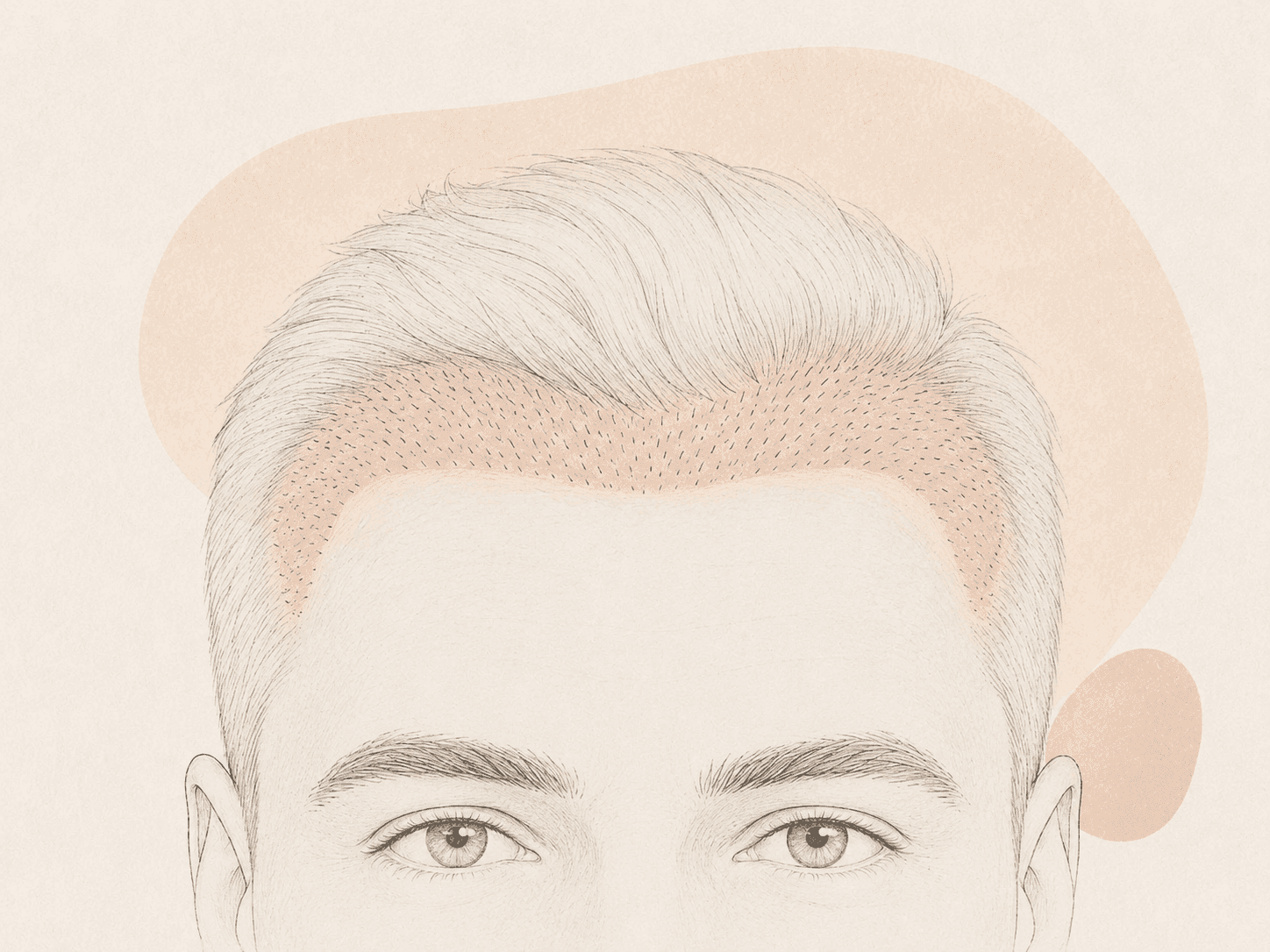
During forehead reduction surgery, the surgeon creates an incision along or immediately in front of the existing frontal hairline. A measured section of non-hair-bearing forehead skin is removed, then the hair-bearing scalp is mobilised and secured in a lower position.
The possible amount of advancement depends on scalp mobility, forehead anatomy, tissue tension, hair density and the planned hairline shape. People with a stable frontal hairline and a mobile scalp may be more suitable for a single-stage procedure.
The lower hairline is visible immediately after surgery, but swelling, incision healing and temporary hair shedding can affect its early appearance. A permanent scar remains at the new hairline and its final visibility cannot be guaranteed.
Goals And Possible Benefits Of Hairline Lowering
For appropriately selected patients, scalp advancement surgery may help achieve goals such as:
- Reducing the visible height of a naturally high forehead
- Moving the existing frontal hairline forward during one operation
- Maintaining the density of the existing hair-bearing scalp at the advanced edge
- Refining selected irregularities in the shape of the frontal hairline
- Supporting facial proportion goals without relying only on transplanted grafts
- Allowing later hair transplantation when additional refinement is considered appropriate
Surgery cannot guarantee a specific amount of lowering, an invisible scar or perfect symmetry. Preferred hairline position and facial proportions should be discussed using realistic measurements rather than attempting to copy another person’s result.
Who May Be Suitable For Hairline Lowering Surgery
Hairline lowering surgery may be suitable for some people with a stable frontal hairline, sufficient scalp mobility and healthy hair growth along the proposed incision.
- A naturally high or disproportionate frontal hairline
- No clear signs of active or progressive frontal hair loss
- Enough scalp mobility to allow advancement without excessive closure tension
- Adequate hair density near the frontal hairline
- Healthy scalp and forehead skin without active infection or inflammation
- Realistic expectations about advancement, asymmetry and scarring
- General health compatible with elective surgery and anesthesia
- Ability to remain abroad for early incision review
Progressive hairline recession, significant frontal hair miniaturisation, limited scalp mobility, previous extensive scalp surgery or a tendency toward problematic scarring may make the procedure unsuitable or require a different approach. Surgery is often less appropriate when future hair loss could expose the incision scar.
A qualified surgeon must examine scalp laxity, hairline stability and long-term hair-loss risk before confirming whether this procedure is appropriate.
Hairline Lowering Techniques
The choice between single-stage advancement and staged tissue expansion depends on the required movement, scalp mobility, previous surgery and the patient’s ability to complete multiple treatment stages.
Single-Stage Scalp Advancement
During one operation, the surgeon removes a measured strip of forehead skin, releases the scalp and moves it forward as far as considered safe without excessive tension. The hairline is then fixed in its new position and the incision is closed along the new border.
This is the more direct approach for patients with adequate scalp mobility. The achievable movement varies and cannot be predicted reliably from photographs alone.
Staged Tissue Expansion
A tissue expander is surgically placed beneath the hair-bearing scalp and gradually filled over a planned expansion period. Once sufficient additional scalp tissue has developed, a later operation removes the expander and advances the expanded scalp.
Tissue expansion may provide more hair-bearing tissue when single-stage movement would be limited. However, it requires repeated visits, temporary scalp distortion and at least two surgical stages.
How Hairline Lowering Surgery Is Performed
The exact surgical process varies according to scalp mobility, fixation method and whether the hairline is advanced in one operation or after tissue expansion.
Hairline Design
The surgeon marks the proposed hairline while considering facial proportions, natural asymmetry, temple transitions and the direction of frontal hair growth. The final design should be agreed before anesthesia.
Incision Planning
The incision is planned along or immediately in front of the existing hairline. Small irregularities may be included to avoid an unnaturally straight scar. Hair follicles near the incision need careful protection.
Forehead Skin Removal
A measured section of forehead skin between the existing and proposed hairline is removed. The amount must remain within the limits allowed by scalp mobility and safe closure tension.
Scalp Mobilisation
The hair-bearing scalp is released from deeper attachments so it can move forward. Additional controlled releases may be used when appropriate while protecting important nerves, blood vessels and hair follicles.
Scalp Fixation
The advanced scalp may be secured to deeper tissue or the skull using sutures, fixation devices or another method selected by the surgeon. Fixation helps support the new position while healing develops.
Hairline Closure
The incision is closed carefully along the new hairline. The closure may be designed to encourage hair growth near or through parts of the scar, but scar visibility and follicle survival vary between patients.
Dressings And Initial Review
Before applying any required dressing, the surgeon checks bleeding, scalp circulation and closure tension. Written instructions should explain incision care, sleeping position, activity limits and warning signs.
Anesthesia And Early Discomfort
Hairline lowering surgery may be performed under general anesthesia or local anesthesia with intravenous sedation. The appropriate approach depends on the planned procedure, facility protocols and the patient’s health. Staged tissue expansion requires separate anesthesia planning for expander placement and later scalp advancement.
Early recovery may involve forehead and scalp tightness, tenderness, headache, swelling or temporary numbness. Tissue expansion may also cause pressure and discomfort during gradual filling.
Severe or increasing pain, sudden swelling, persistent bleeding or new neurological or visual symptoms require prompt medical assessment.
Preparing For Hairline Lowering Surgery Abroad
Preparation should begin before international travel. The proposed amount of advancement remains provisional until the surgeon directly examines scalp mobility, hairline stability and skin quality.
Hair And Scalp Assessment
- Provide clear photographs of the frontal hairline, temples and scalp
- Share details about hairline changes, shedding and previous hair treatments
- Report personal or family patterns of progressive hair loss
- Discuss previous scalp surgery, hair transplantation or brow surgery
- Ask whether dermoscopy or another hair-loss assessment is needed
- Confirm whether the frontal hairline appears stable enough for advancement
Medical Preparation
- Provide a complete medical and surgical history
- Disclose prescribed medicines, non-prescription products and supplements
- Report allergies, bleeding concerns and previous healing problems
- Discuss smoking, nicotine use and other factors that may affect wound healing
- Describe any history of raised, widened or keloid scars
- Do not stop or begin medicines unless the prescribing clinician and surgical team approve the change
Questions For The Surgeon
- Ask how scalp mobility and safe advancement will be measured
- Discuss the planned hairline shape and expected scar position
- Confirm whether an irregular or trichophytic incision design may be used
- Ask how the scalp will be secured and how closure tension will be managed
- Discuss the risks of temporary shedding, permanent hair loss and scar widening
- Clarify whether future hair transplantation may be considered for scar camouflage or refinement
Travel And Follow-Up Planning
- Arrive early enough for an in-person consultation before surgery
- Allow time for early incision checks and dressing review
- Confirm when sutures or staples are expected to be removed
- Choose accommodation with practical access to the treating facility
- Avoid strenuous tourism and tightly scheduled onward travel
- Identify a local clinician who can examine the incision after you return home
Typical Travel Plan For Hairline Lowering Surgery
The appropriate travel plan depends on the surgical technique, anesthesia, wound condition and access to follow-up. Staged tissue expansion requires a much longer and more complex care pathway than single-stage advancement.
Arrival And In-Person Assessment
International patients should arrive with enough time for direct scalp examination, hair-loss assessment, medical review and final hairline design. The proposed amount of advancement may change after the surgeon measures scalp mobility.
Scalp Advancement Surgery
Single-stage forehead reduction is commonly completed during one operation. Depending on the anesthesia plan and clinical findings, the patient may return to accommodation the same day or remain under observation.
Incision And Scalp Review
During the first postoperative days, the surgical team may check swelling, bleeding, scalp circulation and the hairline closure. Dressing care and hair-washing instructions may also be reviewed.
Assessment Before Return Travel
Return travel should take place only after the surgeon confirms that healing is satisfactory. The assessment should consider swelling, pain, wound condition, journey length, medication needs and access to assistance.
Suture Or Staple Follow-Up
Sutures or staples may need removal during early recovery. International patients should confirm whether removal will take place before departure or with a qualified local clinician after returning home.
Tissue Expansion Appointments
Patients undergoing tissue expansion need repeated appointments for gradual filling, scalp monitoring and assessment of the expander. A later operation is required to remove the device and complete hairline advancement, so this approach is generally unsuitable for a single short medical trip.
Hairline Lowering Recovery Timeline
Healing, sensation and scar maturation vary between patients. These time ranges describe a general recovery pattern rather than guaranteed milestones.
First Few Days
Swelling, bruising, tightness, tenderness and numbness may affect the forehead and scalp. Swelling can extend toward the eyelids or upper face. The incision should be protected from pressure, contamination and products not approved by the treating team.
First Two Weeks
Sutures or staples may be removed according to the surgeon’s schedule. Bruising and swelling often improve gradually, although numbness and tightness may continue. Non-strenuous work may resume when healing, comfort and appearance allow.
Weeks Two To Twelve
Temporary shedding near the incision may become noticeable during this period. Short new hairs may later appear if the affected follicles remain viable. The scar may appear pink, firm or more visible before it begins to mature.
Months Three To Six
Scalp sensation and tightness may continue to improve. Temporary shedding may begin to recover, but persistent gaps or concerns about the scar should be reviewed by the surgeon.
Months Six To Twelve
The scar generally continues to soften and fade, although it remains permanent. Hair growth near the incision, scar width and stability of the advanced hairline can usually be assessed more reliably during this period.
After One Year
Further scar maturation may occur. Hair transplantation, scar treatment or another corrective procedure should usually be considered only after adequate healing and specialist reassessment.
Hairline And Incision Care At Home
Aftercare should protect the incision, reduce avoidable tension and maintain communication between the overseas surgical team and local clinicians.
Incision Care
- Keep the incision clean according to the written instructions
- Avoid rubbing, scratching or manually removing crusts
- Use only products approved by the treating team
- Do not remove sutures, staples or dressings without clinical guidance
- Report wound separation, discharge or increasing redness promptly
Hair And Scalp Care
- Follow the approved schedule for washing and brushing the hair
- Avoid tight hairstyles, extensions and traction near the incision
- Delay hair colouring, chemical treatments and heated styling as instructed
- Protect the scar from direct sunlight according to clinical guidance
- Avoid unapproved oils, scar products or topical medicines
Activity And Follow-Up
- Resume exercise, heavy lifting and strenuous activity only after clearance
- Attend planned incision checks and suture-removal appointments
- Send clear photographs at the agreed follow-up intervals
- Keep copies of the operative report and aftercare instructions
- Arrange a local examination when symptoms cannot be assessed adequately through photographs
Risks And Limitations Of Hairline Lowering Surgery
Hairline lowering is an invasive operation that creates a permanent incision at a highly visible border. Possible risks and limitations include:
- Pain, swelling, bruising, headache or scalp tightness
- Temporary or persistent numbness and altered scalp sensation
- Bleeding, hematoma, seroma or infection
- Delayed healing or separation of the incision
- Reduced blood supply, injury to the skin edges or rare tissue loss
- Temporary postoperative shedding near the incision
- Permanent hair loss or widening of the hairline scar
- A visible, raised, depressed, widened or irregular scar
- Asymmetry or an unnatural hairline shape
- Hairline recession or exposure of the scar if progressive hair loss develops
- Injury to sensory nerves or prolonged scalp discomfort
- Overcorrection, undercorrection or partial backward movement during healing
- Adverse reactions related to anesthesia or prescribed medicines
- Need for scar revision, hair transplantation or another corrective procedure
- Dissatisfaction with forehead proportions or cosmetic appearance
Reported complications include temporary or permanent hair loss, unacceptable scarring, persistent changes in sensation, hematoma, wound separation, seroma, folliculitis and postoperative shedding.
Tissue expansion adds risks such as expander infection, exposure, leakage, displacement, pain, temporary deformity and inability to complete the expansion process. Increasing pain, sudden swelling, fever, discharge, wound separation, darkening skin or visual or neurological symptoms require prompt medical assessment.
Planning Hairline Lowering Surgery In Iran Or Turkey
Destination choice should be based on the surgeon’s relevant experience, surgical facility standards and continuity of follow-up rather than a promised amount of hairline advancement. International patients should verify who will perform the operation, how complications are managed and who will review the incision after departure.
Hairline Lowering Surgery In Iran
International patients considering forehead reduction in Iran should look for a surgeon with documented experience in hairline design, scalp mobilisation and management of visible hairline scars. Planning should include direct scalp assessment, realistic advancement limits and a clear follow-up pathway after returning home.
Hairline Lowering Surgery In Turkey
Turkey offers plastic surgery and hair restoration services for international patients, but experience with surgical scalp advancement varies between providers. Before booking, patients should confirm the surgeon’s training, facility standards, fixation and closure approach and the process for managing postoperative complications.
Hear From Patients
Patient Reviews
Questions About Hairline Lowering Surgery
Need More Help?
Have questions or need support planning your next step? Cura can help you understand the process and prepare for clinic conversations.