Hair Transplant Repair Explained
Hair transplant repair is planned around the specific problem created or left unresolved by previous treatment. Concerns may include a straight or excessively low hairline, large visible grafts, incorrect hair direction, uneven density, limited growth, changes in recipient-site texture, visible donor scars or excessive donor depletion.
Correction may involve placing finer grafts, removing selected older grafts, redistributing usable follicles, treating scars or combining several methods across separate sessions. The usual aim is meaningful improvement, not complete reversal of every feature caused by the earlier procedure.
Revision surgery is often more challenging than a first transplant because donor hair is limited and previously treated tissue may contain fibrosis, altered blood supply or existing scars. Poorly planned repair can create further scarring and reduce the options available for future treatment.
Goals and Limits of Hair Transplant Repair
When corrective treatment is suitable and carefully planned, it may help:
- Soften a harsh, straight or plug-like frontal hairline
- Reduce the visibility of selected grafts placed in unsuitable positions
- Improve hair angle, direction or distribution in specific areas
- Add coverage where previous graft growth was limited or uneven
- Camouflage selected linear or circular donor scars with new grafts
- Create a more balanced long-term plan based on the remaining donor reserve
The degree of improvement depends on the original problem, scar condition, available donor hair and response to previous surgery. Corrective treatment cannot replace depleted follicles or guarantee that every scar and irregularity will become unnoticeable.
Who May Be Suitable for Hair Transplant Repair
Hair transplant repair may be considered when the concern is clearly defined, the previous result has had enough time to mature and sufficient suitable donor hair remains for the proposed correction.
- An unnatural or overly dense frontal border that may be softened with camouflage grafts
- Selected large, misdirected or poorly positioned grafts that may be suitable for removal
- Uneven coverage that may be improved without creating unsafe graft density
- A mature donor scar with tissue that may support additional grafting
- Enough remaining donor follicles for responsible harvesting
- Stable or appropriately managed ongoing hair loss
- Realistic expectations about improvement, staged treatment and residual scarring
- General health compatible with elective surgery and local anesthesia
Severe donor depletion, active scalp disease, unstable hair loss, extensive tissue damage or expectations of complete restoration may make further transplantation unsuitable. Depending on the problem, scar revision, scalp micropigmentation, medical hair-loss management, grooming changes or a combination of approaches may be more appropriate.
The earlier transplant usually needs time to heal and mature before its final appearance can be assessed. An experienced hair restoration physician should determine timing after examining growth, scarring and scalp condition.
Hair Transplant Repair Techniques
The repair method should address the specific concern rather than follow a standard revision package. Several techniques may be combined when the remaining donor supply and recipient tissue allow.
Hairline Camouflage
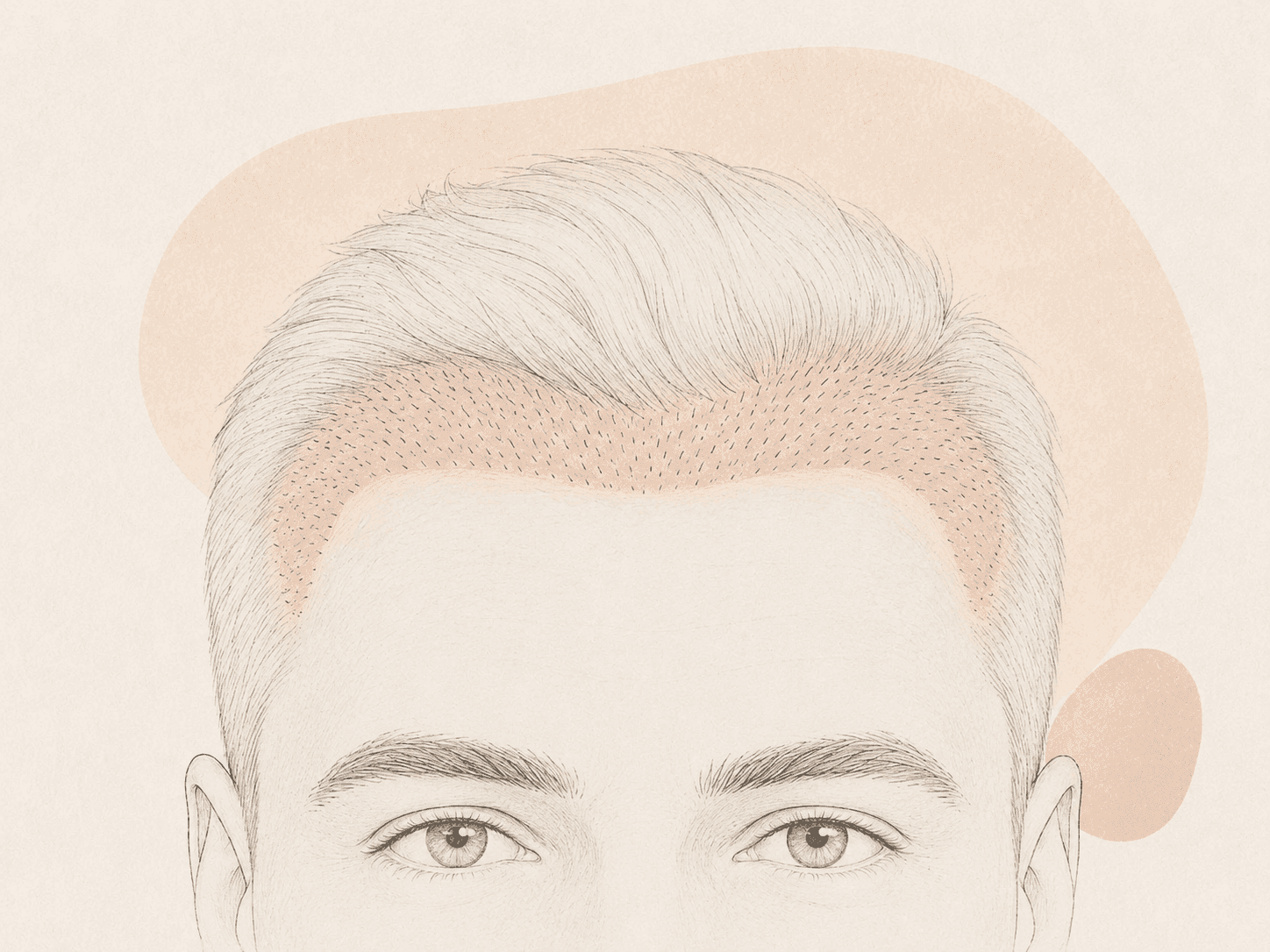
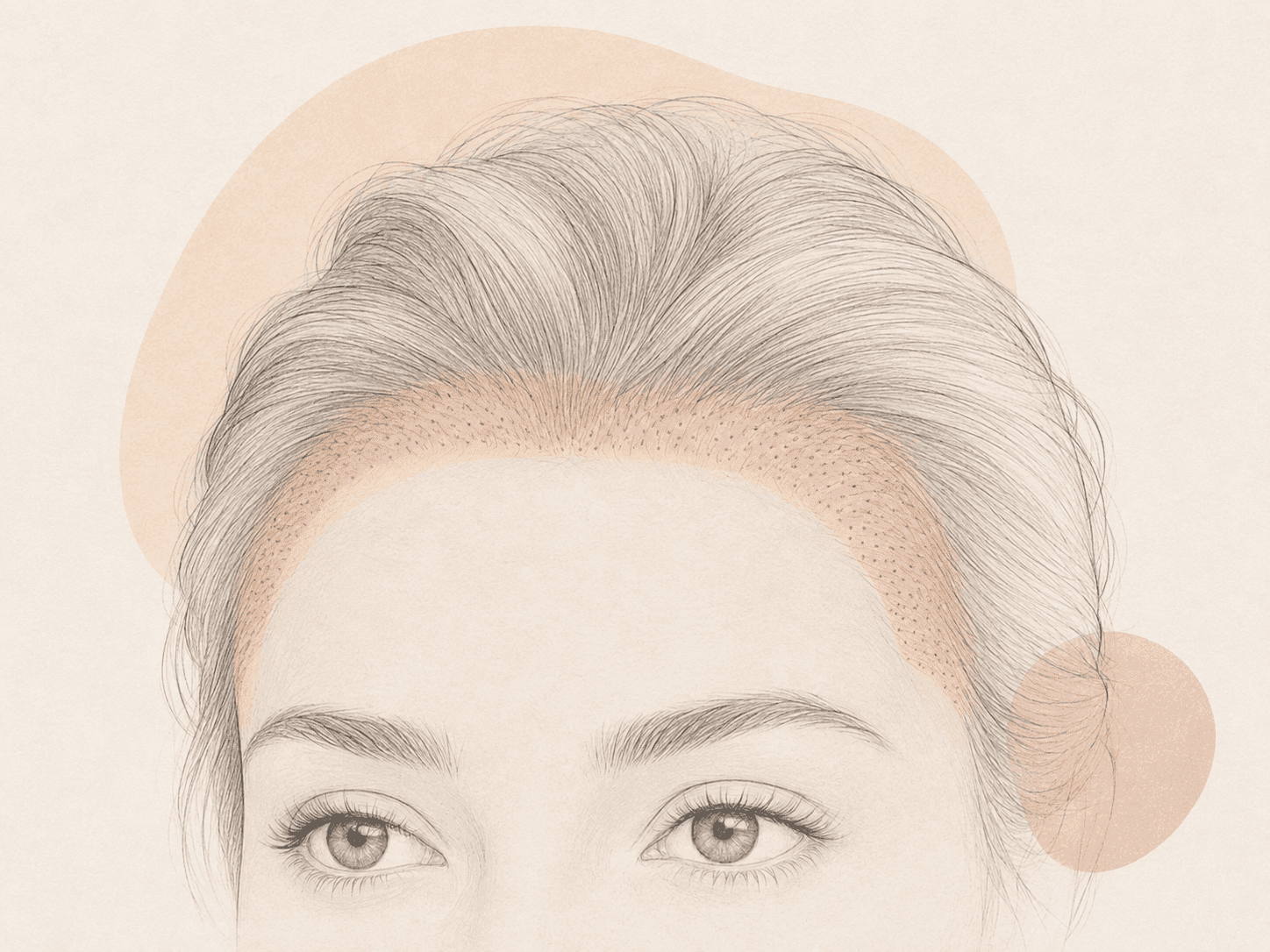
Fine single-hair follicular units may be placed in front of or between selected existing grafts to soften an abrupt, straight or plug-like hairline. The design should remain conservative because lowering the border further can use valuable donor hair and make future recession more difficult to manage.
Graft Removal and Redistribution
Selected large, low, misdirected or poorly positioned grafts may be removed with small punch instruments or another technique chosen by the surgeon. Some removed follicles may be dissected and replanted in a more suitable location, although survival cannot be guaranteed.
Depending on the number, size and location of the removal sites, they may be closed, left to heal naturally or treated during a later stage.
Donor Scar Camouflage
Follicular units may be placed into selected mature FUT scars or visible FUE extraction scars to reduce the contrast between scar tissue and surrounding hair. Growth within scars can be less predictable because tissue thickness, stiffness and blood supply vary.
Grafting does not remove the underlying scar and may not provide enough coverage for very short hairstyles.
Staged Corrective Treatment
Complex repair may be divided into separate sessions. An initial stage may remove unsuitable grafts or revise scarred tissue, while a later stage may add camouflage grafts after healing has been reviewed.
A staged approach can limit the amount of trauma performed at one time and allows the clinician to reassess growth, scarring and donor reserves before continuing.
How Hair Transplant Repair May Be Performed
The exact sequence depends on whether treatment focuses on camouflage, removal of unsuitable grafts, scar coverage or a combination of corrective methods.
Detailed Scalp Mapping
The clinician maps existing grafts, scars, donor depletion and areas of continuing hair loss. Photographs and scalp measurements help document which features should be preserved, removed or concealed.
Conservative Repair Design
A repair plan is created around the remaining donor capacity. Proposed hairline changes, graft-removal targets, scar coverage and graft distribution are reviewed before surgery begins.
Donor Hair Harvesting
When new grafts are required, they may be harvested through FUE, FUT or a carefully selected combination. The chosen method should account for existing scars and avoid concentrating further extraction in depleted areas.
Removal of Selected Grafts
When included in the plan, unsuitable grafts are isolated and removed individually. The surgeon then assesses whether any extracted follicles remain suitable for redistribution.
Graft Inspection and Preparation
Newly harvested grafts and any reusable removed grafts are inspected, sorted and stored appropriately. Fine single-hair grafts may be reserved for the visible frontal transition.
Creation of Recipient Sites
New recipient sites are created with attention to existing follicles, scar tissue, blood supply, angle and direction. Graft density may need to be limited when the tissue is scarred or has undergone several earlier procedures.
Corrective Graft Placement
Grafts are placed according to the repair plan. Single-hair grafts may soften the frontal border, while selected multi-hair units may improve coverage behind the hairline or within suitable donor scars.
Final Clinical Review
Before discharge, the medical team reviews the donor area, graft-removal sites and newly implanted areas. Written instructions should explain how to care for each treated zone and which warning signs need medical attention.
Anesthesia and Comfort During Hair Transplant Repair
Corrective hair transplant surgery is commonly performed under local anesthesia in the donor and recipient areas. Sedation may be considered for selected patients when clinically appropriate and when suitable monitoring is available.
Local anesthetic injections can cause brief stinging. Graft removal, scar treatment and work within previously operated tissue may produce pressure, pulling or greater tenderness than a straightforward transplant.
Postoperative discomfort depends on whether the procedure includes FUE harvesting, FUT surgery, graft removal or surgical scar revision. Severe, increasing or unexpected pain needs prompt medical assessment.
Preparing for Hair Transplant Repair
Preparation should begin with a detailed review of what was performed previously. Photographs alone may not reveal donor depletion, buried grafts, fibrosis or the direction of transplanted follicles.
Review of Previous Procedures
- Provide operative reports, graft counts and treatment dates when available
- Share photographs taken before, during and after earlier procedures
- Identify every area previously harvested through FUE or FUT
- Report any infection, poor healing, tissue injury or other earlier complications
- List previous scar revision, scalp micropigmentation or graft-removal treatment
- Explain which features are most concerning and which improvements matter most
Donor Area Assessment
- Ask how remaining donor density and hair miniaturisation will be assessed
- Confirm whether the safe donor area may have been overharvested
- Discuss existing FUE scars, FUT scars and scalp flexibility
- Ask how many additional grafts may be harvested without increasing donor visibility
- Confirm whether scalp donor hair alone is sufficient for the proposed plan
- Request a long-term donor strategy rather than only a graft estimate for one session
Recipient Area Assessment
- Allow the clinician to examine graft size, angle, direction and spacing
- Discuss pitting, cobblestoning, ridging or other skin-texture concerns
- Confirm which grafts may be removed, concealed or left unchanged
- Ask whether scarred tissue is suitable for further implantation
- Discuss the risk of damaging viable existing grafts during repair
- Agree on realistic priorities when every concern cannot be corrected safely
Medical and Travel Preparation
- Provide a complete medical history and current medication list
- Report allergies, bleeding concerns and a history of abnormal scarring
- Do not stop or start medication without appropriate clinical approval
- Arrive early enough for an in-person examination before the plan is finalised
- Allow time for an early postoperative review before departure
- Identify a local clinician who can provide an in-person examination after you return home
Typical Travel Plan for Hair Transplant Repair
Corrective surgery often requires more assessment time than a first hair transplant. The appropriate length of stay depends on the repair methods, amount of scar work and whether staged treatment is needed.
Arrival and In-Person Examination
International patients should arrive with enough time for direct examination of the donor and recipient areas. After assessing donor depletion, scar quality and the maturity of previous results, the surgeon may modify or decline a plan initially discussed remotely.
Corrective Procedure
Treatment may include donor harvesting, removal of older grafts, redistribution or scar camouflage. Complex repair can take most of the day and may need to be divided into separate sessions.
Postoperative Review
The clinical team may check bleeding, swelling, donor healing, graft-removal sites and implanted areas. Washing instructions may differ between newly grafted zones and areas where older grafts were removed.
Travel Readiness Assessment
Return travel should take place only after the treating clinician confirms that early healing is satisfactory. The assessment should consider pain, bleeding, wound condition, journey length and access to medical support.
Planning Future Sessions
Further stages may be planned only after graft growth, removal sites and recipient tissue have matured. Before treatment begins, international patients should understand the possible number of trips and the criteria used to decide whether another stage should proceed.
Hair Transplant Repair Recovery Timeline
Recovery differs according to the corrective methods used. Scarred or repeatedly treated tissue may heal differently from scalp skin undergoing its first transplant.
First Few Days
Tenderness, redness, swelling, small crusts and temporary numbness may occur. Sites where grafts were removed can also look red or indented during early healing.
First Two Weeks
Crusting usually loosens gradually with the approved washing routine. Sutures or staples may need removal when FUT or surgical scar revision has been performed.
Weeks Two to Eight
Transplanted hair shafts commonly shed during this period. Temporary shedding of existing hairs or follicles from an earlier transplant may also occur after further surgery.
Months Three to Six
Early growth may begin, although it can appear fine, uneven or incomplete. Graft-removal sites and scars may still be changing and should not yet be treated as final.
Months Six to Twelve
Additional growth may appear and the softened hairline or scar coverage can be assessed more meaningfully. Growth within scar tissue may remain less consistent than growth in untreated scalp.
Twelve to Eighteen Months
Further maturation may occur. The surgeon can reassess donor appearance, remaining unwanted grafts, scar visibility and whether another corrective stage may be appropriate.
Aftercare Following Hair Transplant Repair
Aftercare should protect newly implanted follicles, graft-removal sites and previously scarred tissue while maintaining access to clinical review after international travel.
Care of Treated Areas
- Follow the written washing and scalp-handling instructions
- Avoid rubbing, scratching or manually removing crusts
- Use only products approved by the treating team
- Protect grafts and removal sites from pressure and contamination
- Do not apply scar treatments until the surgeon confirms they are appropriate
Activity and Grooming
- Resume exercise, swimming and strenuous activity only after clinical clearance
- Delay close clipping, hair colouring and chemical treatments as instructed
- Avoid hairstyles or headwear that place tension on healing areas
- Follow the specific incision-care plan when FUT or scar revision was performed
- Do not cover healing skin with unapproved fibres, sprays or cosmetics
Long-Term Monitoring
- Send clear donor and recipient photographs at the agreed intervals
- Keep copies of the operative report, graft record and repair plan
- Arrange a local examination when photographs cannot adequately assess symptoms
- Continue appropriate management of ongoing hair loss
- Allow enough healing before deciding whether another repair stage is needed
Risks and Limitations of Hair Transplant Repair
Corrective hair transplantation is an invasive procedure performed in tissue that may already be scarred, depleted or altered by previous surgery. Possible risks and limitations include:
- Pain, swelling, itching, redness or temporary changes in sensation
- Bleeding, infection, folliculitis or delayed healing
- Temporary shedding of existing or previously transplanted hair
- Damage to viable follicles near graft-removal or recipient sites
- Failure of removed grafts to survive after redistribution
- Limited growth or uneven density within scar tissue
- Visible circular scars where unsuitable grafts were removed
- Pitting, depressions, pigment changes or persistent skin irregularity
- Further donor depletion or greater visibility of existing donor scars
- Widening or worsening of a linear donor scar
- An unnatural hairline that remains only partly corrected
- Additional fibrosis that makes future repair more difficult
- Incorrect angle, direction or distribution of newly placed grafts
- Adverse reactions related to local anesthesia, sedation or other medicines
- Rare tissue injury, necrosis or significant wound-healing problems
- Need for further stages, scar treatment or other corrective procedures
- Dissatisfaction when the available donor supply cannot meet the repair goal
Increasing pain, spreading redness, fever, discharge, persistent bleeding, darkening skin or wound separation require prompt medical assessment. Another poorly planned procedure can worsen both the donor and recipient areas.
Planning Hair Transplant Repair in Iran or Turkey
Destination choice should be based on revision experience, physician involvement and continuity of care rather than a promised graft number. Corrective surgery requires detailed donor analysis and may not be suited to high-volume workflows built around standard packages.
Hair Transplant Repair in Iran
International patients considering hair transplant repair in Iran should look for a physician with relevant experience in revision hairline design, graft removal and work within scarred recipient tissue. Planning should include direct donor assessment, transparent discussion of limitations and access to follow-up after departure.
Hair Transplant Repair in Turkey
Turkey has a large international hair restoration sector and also receives patients seeking correction after earlier procedures. Provider experience and physician involvement vary, so patients should confirm who performs the assessment, extraction, graft removal, recipient-site creation and postoperative care before booking.
Hear From Patients
Patient Reviews
Questions About Corrective Hair Transplantation
Need More Help?
Have questions or need support planning your next step? Cura can help you understand the process and prepare for clinic conversations.