Full-Arch Implant Rehabilitation Explained
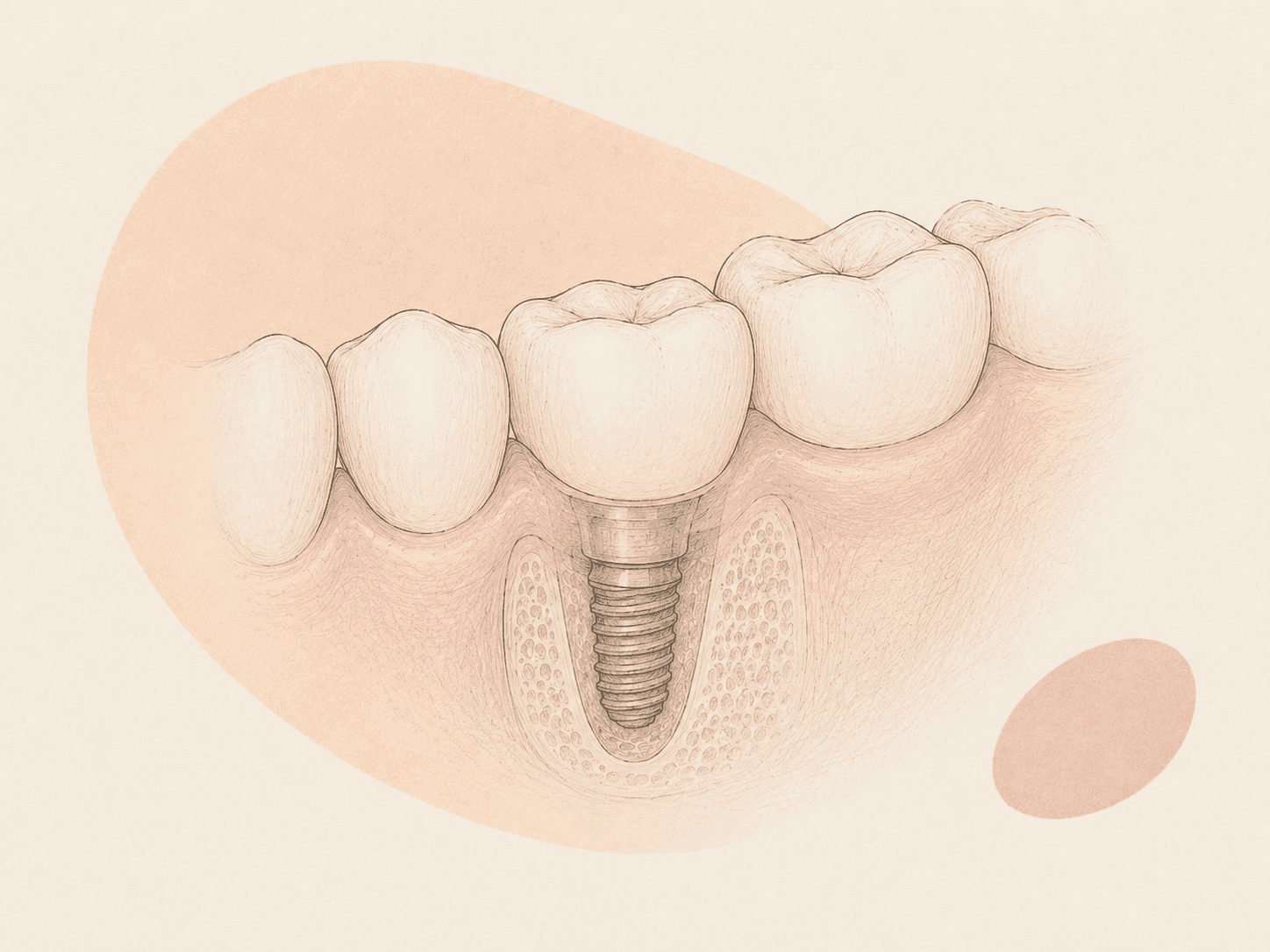
Full-arch implant rehabilitation is a comprehensive dental treatment for people with many missing teeth, failing teeth or dentures that no longer feel stable. It uses implants placed in the jawbone to support a fixed bridge or removable overdenture, with the aim of rebuilding chewing support, speech comfort and smile appearance.
Some plans may include extractions, bone grafting or sinus-related planning for the upper jaw. Because treatment can involve a temporary prosthesis followed by a final restoration later, international patients need a clear schedule for early checks before travelling home and follow-up steps after returning.
Goals And Possible Benefits Of Full-Arch Implants
When full-arch implants are clinically appropriate, they may improve function and daily comfort compared with missing teeth or unstable dentures. Results vary by diagnosis, implant stability, bite control, oral hygiene and long-term maintenance.
- May provide stronger chewing support with a stable prosthesis
- Can feel more secure than conventional dentures in many cases
- May help restore smile support and planned tooth display
- Can replace a full arch without relying on compromised remaining teeth
- May allow a choice between a fixed bridge and an implant-retained overdenture when clinically suitable
Who May Need Full Mouth Implant Rehabilitation
Full mouth implant rehabilitation may be discussed when many teeth are missing, failing or no longer able to support stable dental function. An implant dentist or oral and maxillofacial surgeon must confirm suitability through examination and dental imaging, often including 3D planning.
- Multiple missing or failing teeth in one or both arches
- Gum disease that has been treated and is stable
- Enough bone for implant placement, or a plan for grafting when needed
- Medical stability for surgery and anesthesia planning
- Realistic expectations about staged care, healing time and maintenance
- Enough time in the destination for early reviews before travelling home
Smoking, uncontrolled diabetes, untreated gum disease, heavy teeth grinding and certain medications can increase complication risk. These factors may change the recommended technique, timeline or type of prosthesis.
Full-Arch Implant Technique Options
Full-arch dental implants can be planned with different implant numbers, prosthesis designs and anchorage methods. The clinician selects an approach based on bone volume, anatomy, bite forces and whether a fixed bridge or overdenture best fits the case.
All-on-4 Full-Arch Implants
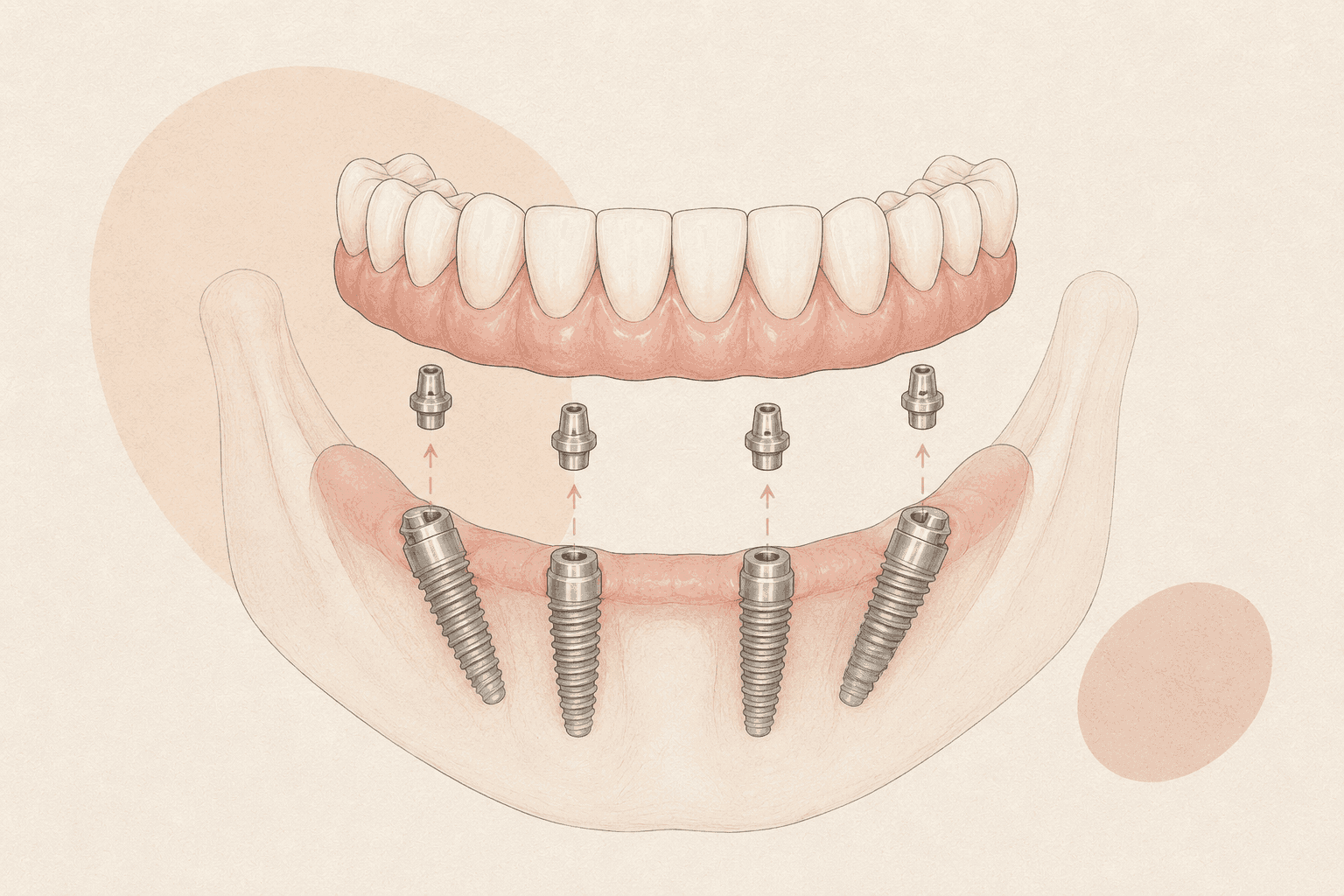
All-on-4 uses four implants in one arch, often with angled back implants to make use of available bone. A temporary fixed bridge may be placed in selected cases when implant stability is adequate and bite forces can be controlled.
All-on-6 Full-Arch Implants
All-on-6 uses six implants to support a fixed full-arch bridge. It may be considered when anatomy allows wider implant distribution and the restorative plan benefits from additional support.
Implant-Supported Fixed Full-Arch Bridge
A fixed full-arch bridge may be supported by four, six or more implants depending on the case. The design may be screw-retained and should be planned with long-term cleaning access and professional maintenance in mind.
Implant-Retained Overdenture
An implant-retained overdenture uses implants and attachments to stabilize a removable denture. It may suit some patients who prefer removability for cleaning, or when clinical factors make a fixed bridge less suitable.
Zygomatic Implants
Zygomatic implants are longer implants anchored in the zygomatic bone. They are used only in selected cases with severe upper jaw bone loss and require specialized training, careful planning and close follow-up.
Pterygoid Implants
Pterygoid implants provide back-of-mouth anchorage in selected upper jaw cases where bone availability is limited. They may be considered to support a fixed bridge when anatomy and clinician experience are appropriate.
How Full Mouth Dental Implant Treatment May Be Planned
Full mouth dental implant rehabilitation involves coordinated surgical and restorative steps. The sequence depends on whether teeth need removal, whether a temporary bridge is planned and whether grafting or additional preparation is required.
Assessment And Treatment Planning
The dental team reviews medical history, gum health, bite, smile goals and practical travel needs. Imaging helps map anatomy, plan implant positions and choose a fixed bridge or overdenture design.
Extractions And Site Preparation
If failing teeth are present, extractions may be performed. Depending on the site, grafting or other preparation may be recommended to support healing and help plan implant timing.
Implant Surgery
Implants are placed in the jawbone under local anesthesia with or without sedation, or under general anesthesia in selected cases. Implant stability is checked and healing components are fitted.
Temporary Teeth
Some patients receive a temporary fixed bridge or temporary denture soon after surgery. This depends on implant stability and bite control. Temporary teeth are designed to protect healing and should not be treated like final teeth.
Healing And Implant Integration
During the integration period, the implants gradually bond with the bone. Follow-ups monitor tissue healing, hygiene, prosthesis comfort and bite forces, with adjustments made when needed.
Final Prosthesis Fitting
After sufficient healing, the final fixed bridge or overdenture is made and fitted. The team checks bite, speech, comfort and cleaning access and provides a long-term maintenance plan.
Anesthesia, Comfort And Warning Signs
Full-arch implant surgery is commonly performed with local anesthesia and may include sedation depending on procedure length, anxiety level and clinical setting. Some complex cases may be planned under general anesthesia when appropriate and safe for the patient.
Swelling, bruising and gum soreness are common after treatment. Discomfort varies and should be managed according to the clinic’s written instructions. Contact the treating team promptly if you have worsening pain, persistent bleeding, fever, increasing swelling or signs of infection.
Preparing For Full-Arch Implant Treatment Abroad
Good preparation helps reduce avoidable risks and supports a more organized travel experience for implant-based teeth replacement.
- Share your medical history, allergies and current medications, including blood thinners
- Provide recent dental records when available, or plan for imaging at the clinic
- Discuss gum disease treatment if you have bleeding gums or a history of periodontal care
- Ask about smoking cessation support, as smoking can increase implant complications
- Plan for soft foods and enough rest after surgery
- Confirm the follow-up schedule in the destination and after returning home
- Keep travel flexible in case healing requires extra checks
Typical Travel Timeline For Full Mouth Implants
International patient timelines vary widely. Many full mouth implant rehabilitation plans are completed in stages, often with one surgical trip and a later visit for the final bridge or definitive overdenture fitting.
Day 1
Arrival, medical review, dental examination and confirmation of the planned approach. Imaging is completed if needed and the team explains the schedule, consent process and aftercare instructions.
Day 2
Digital planning, bite records and preliminary restorative steps may take place. If a temporary prosthesis is planned, laboratory coordination and design steps may also be arranged.
Day 3
Extractions and implant placement are performed if required. A temporary prosthesis may be delivered in selected cases. You receive written instructions and emergency contact details.
Days 4 To 7
Healing checks, hygiene coaching and bite adjustments are scheduled. If a temporary fixed bridge is present, small adjustments may help protect implants while swelling settles.
Days 7 To 10
A final in-country review helps guide travel readiness. The clinic checks that healing is progressing and provides a plan for remote check-ins and local support if concerns arise.
Later Return Visit
Many patients return after the integration phase for the final full-arch bridge or definitive overdenture fitting. This visit often includes try-ins, bite refinement and cleaning instructions for long-term maintenance.
Full-Arch Implant Recovery And Follow-Up Timeline
Recovery depends on surgical complexity, whether extractions were performed, whether grafting was required and whether a temporary bridge was fitted. Your clinician will provide a timeline based on your case.
First Week After Surgery
Swelling, bruising and gum tenderness are common. A soft diet is usually recommended and oral hygiene steps are adjusted to protect healing tissues. Speech can feel different at first, especially with a new prosthesis.
Weeks 2 To 6
Tissues continue to heal and comfort often improves. Bite adjustments may be needed and cleaning routines become more consistent. Many people resume most daily activities while following chewing precautions.
Months 2 To 6
Implant integration continues. The team assesses stability and plans the timing for the final prosthesis. In some cases, additional healing time is recommended before the final restoration.
Long-Term Maintenance
Long-term stability depends on daily cleaning, professional maintenance visits and management of risk factors such as smoking or teeth grinding. Prosthesis components may need servicing over time.
At-Home Care After Full-Arch Implants
After returning home, ongoing care and monitoring help protect full-arch implants and the prosthesis.
- Follow a daily cleaning routine around the implants and under the bridge, or clean overdenture attachments as instructed
- Attend professional maintenance visits on the schedule recommended by your clinician
- Ask about a night guard if you grind your teeth
- Keep follow-ups for bite checks and prosthesis servicing if you notice clicking, loosening or fracture
- Seek dental review if you develop swelling, bleeding gums, bad taste, fever or increasing pain
For international patients, a written plan should clarify who to contact locally and what documentation to share, including implant system details and prosthesis specifications.
Risks And Complications Of Full Mouth Implants
Full mouth implant rehabilitation is a major dental treatment and risks should be discussed openly before travel. Your clinician should explain how these risks relate to your anatomy, medical history and chosen technique.
Common Short-Term Risks
- Swelling, bruising and soreness
- Bleeding from gum incisions
- Infection risk at surgical sites
- Temporary speech changes or chewing discomfort
Surgical And Anatomy Risks
- Nerve irritation or numbness depending on implant location
- Sinus-related issues with some upper jaw implants
- Jaw joint discomfort related to bite changes
Imaging and planning help reduce risk, but they cannot remove it completely.
Implant Integration Risks
- Failure of one or more implants to integrate
- Need for additional healing time or revision planning
- Higher risk with smoking, uncontrolled medical conditions or poor plaque control
Prosthesis And Maintenance Risks
- Prosthesis fracture, wear or screw loosening
- Sore spots with overdentures or attachment issues
- Inflammation around implants, including peri-implant mucositis or peri-implantitis
Planning Full-Arch Implants In Iran Or Turkey
International patients may consider Iran or Turkey for full-arch dental implants when they need implant teams, imaging access, restorative planning and coordinated timelines for travel, early checks and continuity of care.
Iran
- Implant dentistry services in major cities with diagnostic imaging and multidisciplinary support
- Restorative planning for fixed bridges and implant-retained overdentures based on clinical needs
- Scheduling that may align surgery, early follow-ups and travel readiness checks
Ask how the clinic manages staged care, what documentation you receive and how remote follow-ups are handled after you return home.
Turkey
- Implant centers with structured workflows for full-arch implants, temporary bridges and final restorations
- Digital planning and laboratory collaboration that may support complex prosthesis design
- Coordination services that help organize appointments, recovery checks and post-travel support planning
Ask what maintenance schedule is recommended and how urgent concerns are handled if symptoms appear after travel.
Hear From Patients
Patient Reviews
Questions About Full-Arch Implant Rehabilitation
Need More Help?
Have questions or need support planning your next step? Cura can help you understand the process and prepare for clinic conversations.