Complete Dentures And Full Tooth Replacement Explained
Complete dentures are used when all teeth in an upper or lower arch are missing or need to be removed. They are custom-made using impressions, bite records and a try-in stage to check tooth position, appearance and speech before the final denture is finished.
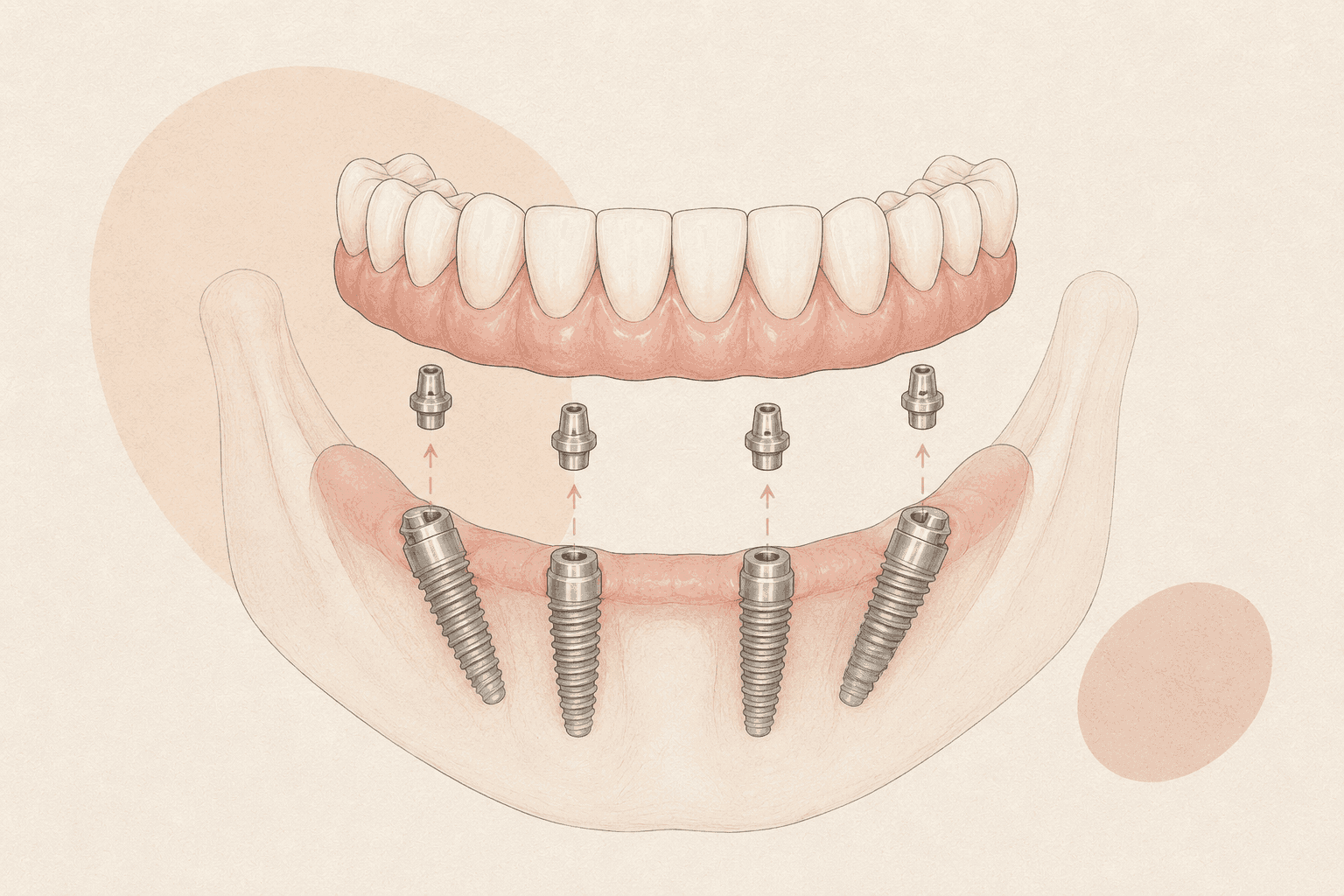
Full dentures depend on the shape of the jaw ridge, saliva and muscle control for retention. Some patients may also discuss implant-supported options for added stability, but this depends on bone levels, health factors and specialist assessment.
Goals Of Complete Denture Treatment
Complete dentures may be considered when natural teeth can no longer be maintained and full arch replacement is needed.
- Replaces missing teeth in one arch or both arches
- Supports everyday chewing and speech
- Helps restore facial support that may change after tooth loss
- Can be removed and adjusted as oral tissues change
- May be coordinated with extractions and ridge smoothing when needed
Who May Need Complete Dentures
Suitability depends on overall oral health, gum condition, ridge anatomy and whether any remaining teeth can be restored. A dentist or prosthodontist can confirm whether full dentures are the most appropriate option and whether pre-prosthetic steps are needed.
- People who are missing all teeth in an arch or are expected to have remaining teeth removed
- Patients with teeth that cannot be restored predictably because of decay, gum disease or fracture
- Individuals who can attend adjustment visits and maintain long-term denture care
- International patients who can plan for fittings, healing checks and follow-up after returning home
A qualified dental professional can confirm eligibility and recommend the most suitable denture type after examination and imaging when needed.
Complete Denture Options
Complete dentures can be planned in different ways. The best option depends on whether extractions are needed, how soon teeth need to be placed and how much follow-up time is available.
Conventional Complete Dentures
Conventional complete dentures are made after the gums and jaw ridge have healed following extractions, when tissues are more stable. This may support a more predictable fit, although adjustments are still common over time.
Immediate Complete Dentures
Immediate dentures are placed on the day of extractions so the patient does not go without teeth during early healing. Because tissues change significantly after extractions, relines and adjustments are usually needed as swelling settles and the ridge remodels.
Single Arch Complete Denture
A single arch complete denture replaces all teeth in either the upper or lower jaw. Fit and stability can differ between arches, and the clinician will explain what to expect based on ridge anatomy.
How Complete Denture Treatment May Be Planned
Complete denture treatment usually requires several visits to collect accurate records and refine fit and bite. The sequence may differ depending on whether conventional or immediate full dentures are planned.
Assessment And Treatment Planning
The clinician examines the gums, remaining teeth and jaw ridge. Imaging may be used to assess bone and plan extractions or pre-prosthetic procedures such as alveoloplasty when indicated.
Impressions And Bite Records
Impressions and bite registration record how the jaws relate to each other. These records guide the shape of the denture base and the tooth setup for function and speech.
Try-In Appointment
A trial denture setup is checked for appearance, bite and pronunciation. Adjustments can be made before the final denture is processed.
Denture Delivery And Adjustments
The final denture is fitted and instructions are given for cleaning, wearing schedule and sore spot management. Follow-up visits are important for adjustments, especially during the first weeks.
Healing And Relines
Gum and bone shape can change over time, which may affect fit. A reline may be needed to improve stability, especially after immediate dentures or recent extractions.
Comfort And Anesthesia For Complete Dentures
Denture fabrication visits are usually not painful. Discomfort is more likely when extractions or ridge smoothing are part of the plan. The clinician will explain what to expect and how comfort can be managed.
When Anesthesia May Be Used
Local anesthesia is commonly used for extractions and alveoloplasty. Sedation options may be available for extensive extractions or dental anxiety, depending on medical history and the clinical setting.
Early Adaptation To Full Dentures
Sore spots, increased saliva, mild gagging or speech changes can happen while adapting to full dentures. These issues often improve with adjustments and practice, but adaptation varies from person to person.
Managing Denture Discomfort
Follow-up visits are the safest way to manage sore spots and fit issues. Avoid adjusting dentures at home because this can make fit and stability worse.
Preparing For Complete Dentures Abroad
Preparation focuses on confirming the denture plan, coordinating any extractions and allowing enough time for fittings and early adjustments while abroad.
Clinical Preparation
- Share dental history, current dentures if any and existing fit problems
- Provide a medication list and allergy information
- Confirm whether extractions and alveoloplasty are needed
Travel Planning
- Allow time for multiple visits and early adjustments
- Plan a soft diet for the first days after delivery or extractions
- Arrange support if sedation is planned for extractions
Setting Realistic Expectations
Full dentures often require an adaptation period and more than one adjustment visit. Discuss what level of stability is realistic for your ridge anatomy and whether implant-supported options should be evaluated.
Typical Travel Timeline For Complete Dentures
International patient timelines depend on whether immediate dentures with extractions or conventional dentures after healing are planned. Many clinics arrange visits for records, try-in and delivery across several days.
Arrival And Assessment
Consultation, imaging when needed and confirmation of the denture plan take place first. If extractions are required, the timing and anesthesia plan are confirmed.
Records And Try-In
Impressions, bite records and a try-in appointment are scheduled across several days. This step helps reduce issues with bite and speech.
Delivery And Early Adjustments
The dentures are delivered and care instructions are provided. An early review within a few days is common to manage sore spots and refine fit.
Return Home Plan
You leave with documentation of the denture design and follow-up recommendations. Plan local dental visits for additional adjustments, relines or repairs if needed.
Complete Denture Adaptation And Healing Timeline
Adapting to complete dentures takes time. Healing may also be affected by extractions and ridge changes if they were part of the treatment plan.
First Week
Sore spots and speech changes are common and often require adjustment visits. If extractions were performed, swelling can affect denture fit.
Weeks 2 To 6
Many people become more comfortable with chewing and speaking, although further adjustments may still be needed. Fit can change as tissues heal and remodel.
Following Months
Bone and gum tissues continue to change after extractions. Relines are often discussed when the denture becomes loose. Regular checkups help maintain comfort and function.
Complete Denture Aftercare And Maintenance
Long-term care helps maintain hygiene, comfort and denture lifespan. International patients should plan follow-up access at home for ongoing adjustments.
Cleaning And Wearing Routine
Clean dentures daily and follow guidance on overnight removal. Gum tissue also needs gentle cleaning to support oral health.
Adjustments And Relines
Do not ignore sore spots because they can lead to ulcers. Arrange professional adjustments. Over time, relines may be needed as the jaw ridge changes.
Eating And Speech Practice
Start with softer foods and cut food into small pieces. Speech practice can help adaptation. If stability remains difficult, discuss other options with a clinician.
When To Seek Dental Review
Seek dental review for persistent pain, ulcers, loosening, cracks or signs of infection. If you are back home, your local dentist can use your treatment notes to help coordinate care.
Risks And Limitations Of Complete Dentures
Complete dentures are a common option for full tooth loss, but they have limitations and require ongoing maintenance. The clinician should explain what is realistic for fit and function based on your anatomy.
Common Issues
- Sore spots and ulcers, especially early on
- Loosening over time because of ridge changes
- Chewing limitations compared with natural teeth
- Speech adaptation challenges
Less Common Concerns
- Fungal infection such as denture stomatitis if hygiene is poor
- Cracks or fractures that require repair
- Persistent instability, which is more common with lower dentures because of anatomy
When To Seek Help
Seek assessment if you have worsening pain, swelling, persistent ulcers or difficulty eating and speaking that does not improve with adjustments. If extractions were part of your plan, seek urgent care for heavy bleeding, fever or spreading swelling.
Planning Complete Dentures In Turkey Or Iran
For full denture treatment abroad, international patients often focus on prosthodontic experience, access to dental labs and a process that includes try-ins and follow-up adjustments to support comfort and bite.
Turkey
Turkey has established dental services in major cities, including clinics that provide removable prosthetics and pre-prosthetic procedures when needed. When comparing options, review prosthodontic experience, lab workflow, communication quality and whether early adjustment visits are included before travel.
Iran
Iran has long-standing dental education and prosthodontic services in larger urban centres. International patients may consider Iran when they can access careful case review, coordinated planning for extractions and denture fabrication and documentation for follow-up at home.
Hear From Patients
Patient Reviews
Questions About Complete Dentures
Need More Help?
Have questions or need support planning your next step? Cura can help you understand the process and prepare for clinic conversations.