
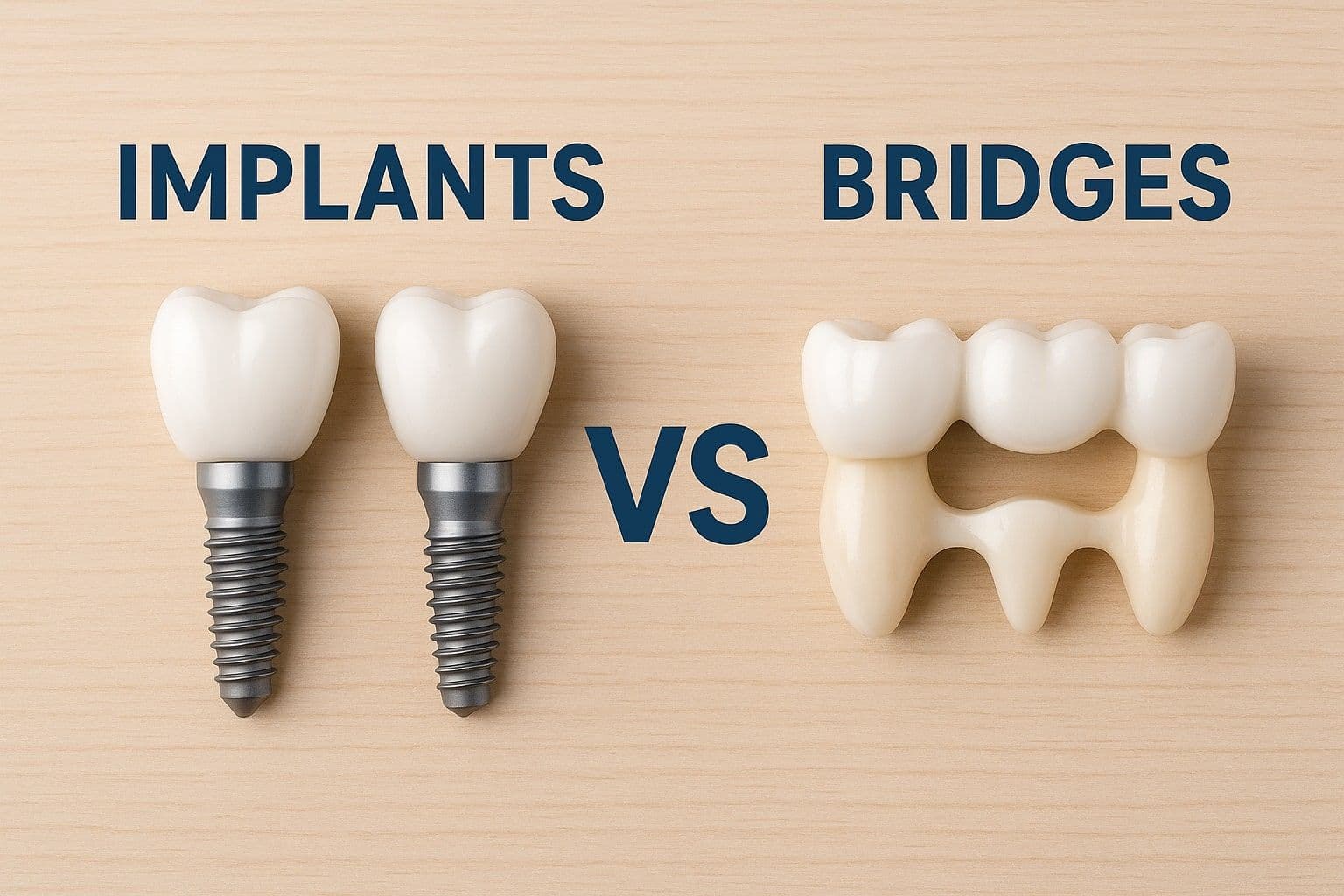
Choosing how to replace a missing tooth usually starts with a practical comparison: how each option works, how long treatment may take and what kind of follow-up is needed. A dental bridge and a dental implant can both support appearance and chewing, but they are planned in different ways. When dental treatment abroad is part of the decision, travel timing and aftercare become especially important.
This guide explains dental bridge vs implant in clear language. It looks at how each option works, the main differences between them and what international patients may want to discuss before planning care in another country. It is not medical advice. The aim is to help you prepare better questions for a qualified dentist who understands your full dental and medical history.
Understanding Dental Bridges and Implants
Dental bridge. A bridge replaces one or more missing teeth by using the teeth on either side of the gap as support. These supporting teeth are usually shaped so a joined set of crowns can sit over them, with a replacement tooth or teeth in the middle.
Dental implant. An implant is a small metal post placed in the jawbone where the tooth root used to be. After healing, a crown, bridge or denture can be attached to the post. The implant works like an artificial root that supports the new tooth.
Both options are used for tooth restoration. They differ in how they are attached, how they affect nearby teeth and how healing is managed. For patients who travel, the number of appointments and time between stages can also be different.
Key Differences Between a Dental Bridge and an Implant
When comparing a dental bridge vs implant, it helps to focus on practical differences instead of only looking at photos or marketing descriptions.
- Support. A bridge relies on neighbouring teeth for support. An implant is anchored in the bone and usually does not need support from nearby teeth.
- Effect on natural teeth. For a bridge, supporting teeth often need to be reduced in size so crowns can fit over them. An implant usually leaves nearby teeth unchanged, which may be relevant when those teeth are healthy.
- Timing. A bridge can sometimes be completed over a shorter period once the area has healed after extraction. An implant often needs a healing phase before the final crown is placed.
- Surgery. Bridges usually do not involve surgery in the jawbone. Implants require a minor surgical procedure, followed by a period of healing and review.
Your general health, bone quality, gum condition and personal goals all influence which option may be suitable. A dentist or specialist in tooth restoration can explain how these factors apply to your situation.
Deciding Between a Bridge and Implant When You Travel
For international patients, the decision is not only clinical. It also affects appointment planning, recovery time and how follow-up is handled after returning home. Some treatments may be completed in one trip, while others are planned more safely across two or more visits.
When discussing international dental care, ask about:
- Number of visits. How many clinic visits are needed for each option and how long each visit should be.
- Healing time. How long gums or bone may need to heal between stages. Implants often require several weeks or months before the final crown is placed.
- Care at home. Which checks or temporary solutions can be arranged with your own dentist between trips.
- Future changes. How each option can be repaired, adjusted or reviewed if something changes years later.
Dental care abroad can be easier to compare when treatment plans are written in simple language. A clear plan can help you review options with a dentist at home and think through travel dates, work responsibilities, family duties and follow-up needs.
Questions to Ask Before Choosing a Dental Clinic Abroad
Before choosing a dental clinic abroad, it can help to prepare clear questions. This makes it easier to compare options, understand the proposed plan and know what support is available before, during and after travel.
- Who will review my case and explain whether a bridge or implant may be suitable for me?
- What experience does the clinic have with dental bridges, implants and international patients?
- Will I receive a written treatment plan that explains stages, materials, timing and follow-up?
- What could change after an in-person examination or new imaging?
- How will temporary teeth, healing checks and final fitting be managed if more than one trip is needed?
- Which language support or coordinator support is available during the process?
- How should I contact the clinic if I have concerns after returning home?
Recovery, Long Term Care and Safety
Whichever option you choose, daily care matters. Bridges and implants both need careful brushing around the gums and cleaning between teeth. Your dentist may suggest special floss, small brushes or other tools to help keep the area clean.
General points to discuss include:
- How to brush and clean under or around a bridge
- How to care for the gums around an implant crown
- How often to arrange professional cleaning and checkups
- Which habits, such as smoking or grinding, may affect long term results
Dental procedures can involve expected soreness, mild swelling or temporary sensitivity. Any procedure also carries some risk whether it is performed at home or abroad. Your dental team should explain what is expected, what is not expected and when urgent care may be needed.
- Sudden chest pain or trouble breathing
- Heavy bleeding in the mouth that does not slow
- High fever with chills or feeling very unwell
- Rapidly spreading redness, severe pain or pus around the treatment area
- New confusion, trouble speaking or weakness in the face or limbs
If symptoms like these appear, contact local emergency services or go to the nearest hospital without delay. Once you are safe, update your dentist or clinic so they understand what happened and can guide later care.
Choosing between a dental bridge and an implant depends on your mouth, your health, your timeline and your long term care plan. Taking time to understand both options, compare written treatment plans and ask about follow-up can help you make a more informed decision. Cura can support international patients by helping organize questions, coordinate communication and plan the practical steps around dental care abroad.
This article is for general information only. It does not replace advice from your own dentists, doctors or local healthcare services.